What Does This Report Tell You?
An open-ended report-reading workshop. You'll sit with a real anonymized Zoo Insights Report and work through the same questions a Zookeeper asks before saying a single word out loud.
What Does This Report Tell You?
An open-ended report-reading workshop. You'll sit with a real anonymized Zoo Insights Report and work through the same questions a Zookeeper asks before saying a single word out loud.
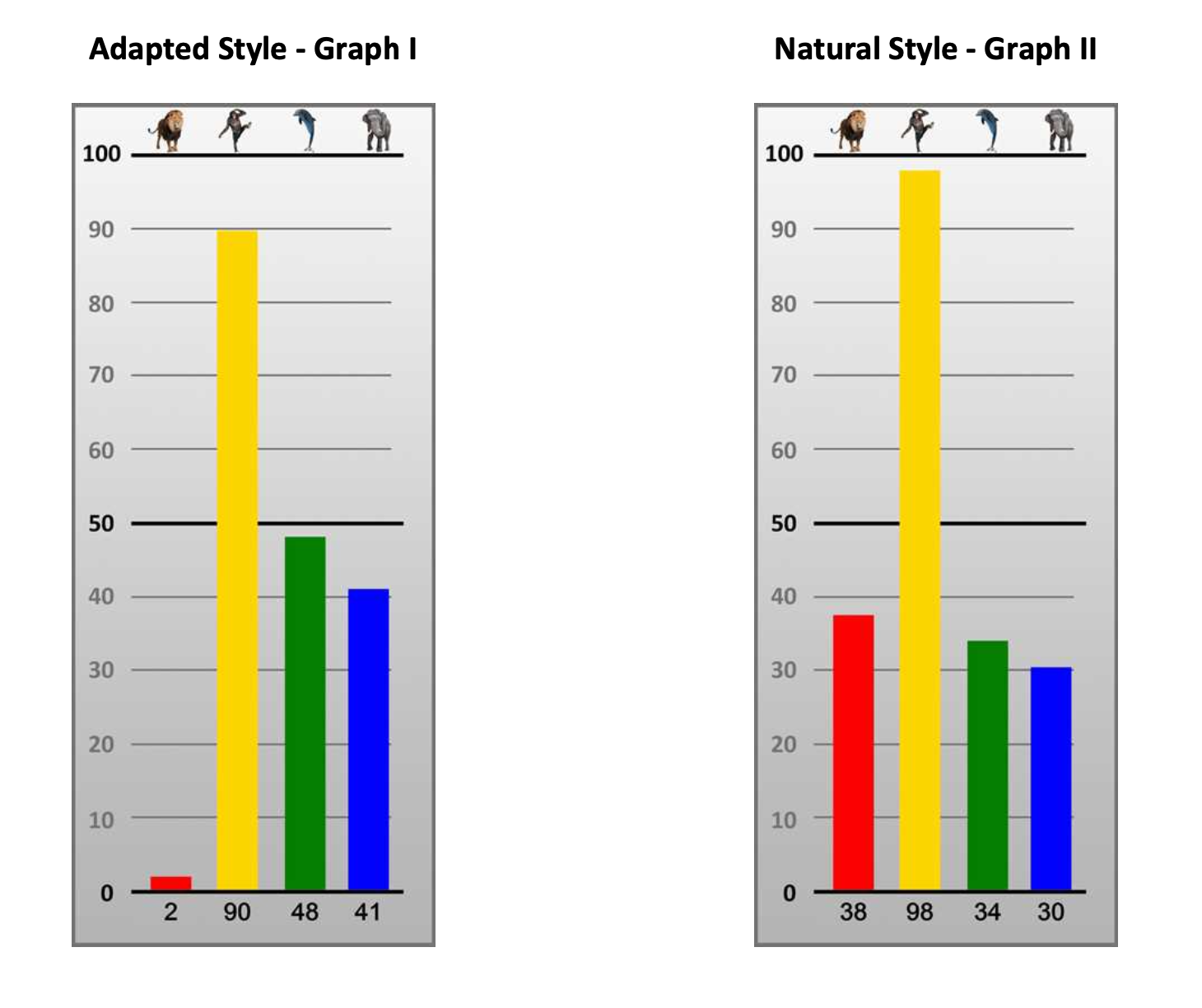
Read the report above slowly. Do not skip to conclusions. The goal isn't a right answer — it's a Zookeeper-level read: anchor on the Natural graph, name what you actually see, surface the four signals from Reading 2.1.3 (energy line, over-extension, under-extension, Natural vs. Adapted gap), and end with curiosity rather than verdict.
Work through the questions below in order. Type your responses in the space provided. There is no scoring — these are reflection prompts to build instinct before Live Assessment 1.
Anchor on the Natural graph
Looking at the Natural graph (Graph II) only — what is this person's primary archetype, and what specifically in the graph tells you that?
The Lemur score is 98 on the Natural graph. What does an over-extended score (>90) mean about this person's wiring, and what would you expect to see when they are in flow versus in distress?
The Lion, Dolphin, and Elephant scores on the Natural graph are all between 30 and 38. What does that flat secondary band tell you about how this person naturally operates outside their dominant Lemur energy?
Read the Adapted graph against the Natural graph
The Lion score drops from 38 (Natural) to 2 (Adapted). Using the language of suppression and under-extension from Reading 2.1.4, what is the most honest read of what's happening for this person in their current environment?
The Lemur score is over-extended on both graphs (98 → 90). What does sustained over-extension cost — and what would you want to ask this person about how often they feel "on"?
The Dolphin and Elephant scores stay roughly stable across both graphs (34 → 48, 30 → 41). What does that tell you about which parts of this person's natural style the environment is actually receiving?
The full Zookeeper read
Naming the four signals from Reading 2.1.3 — energy line, over-extension, under-extension, Natural vs. Adapted gap — which one is doing the most work on this report, and why?
What hypothesis would you hold (lightly) about the environment this person is operating in? Reference Reading 2.1.2 on environment as a third variable.
You are sitting across from this person. You have 90 seconds. Write — word for word — the opening you would use after sliding both graphs across the table. Lead with the Natural graph. Invite, don't conclude.
Self-check rubric
Before you move on, read your responses back against this checklist from Reading 2.1.6 (The 8 Most Common Misreads):
This activity is the live rehearsal for the Zoo Insights Report half of Live Assessment 1.
Responses are saved locally on this device for your own reference.